Japan Stigmatized Property 3 Kannonzaki Park (観音崎公園)
Kanagawa park and former fortress grounds where distance and quiet feeds hide slow threats.
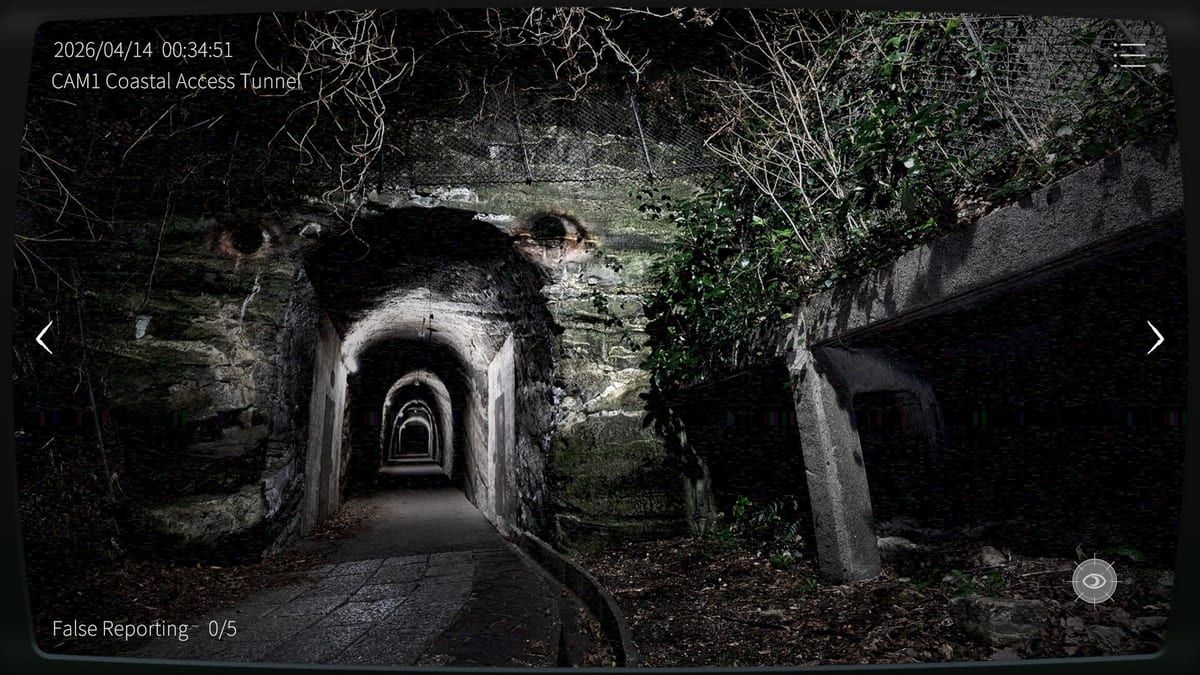
Case overview
Kannonzaki Park (観音崎公園) is the outdoor-leaning Japan Stigmatized Property 3 assignment set in Kanagawa on former fortress grounds. Wide spaces, path cameras, and longer sightlines replace the packed shelves of Sugiya Ryokan and the staged halls of Blue House. The desk rules stay identical: survive 00:00–05:00, cycle A/D, toggle night vision with W, hold-click only on confirmed anomalies.
Open air does not mean low tension. Distance hides motion until it is late. Quiet feeds encourage officers to linger elsewhere. Park and fortress framing also create lighting transitions that look natural until they are not.
Distance and silence as failure modes
Indoor clutter makes you over-report. Park cameras make you under-rotate. If a path feed looks empty for minutes, you may skip it while checking a dramatic interior or gate camera. That skip is how anomalies mature. Build a rotation that treats “boring” exterior cams as mandatory stops, not optional scenery.
At midnight, mark landmarks per camera: bench, lamp post, fence gap, wall line, gate shadow. Those anchors are your outdoor baseline. When an anchor changes or a figure appears between anchors, you have a reportable delta instead of a vague creepy feeling.
Camera method for park and fortress feeds
Do a full dual-mode pass early. Night vision often reveals edge detail that washed-out park lighting hides. Standard view can still be better for judging bright path lamps or obvious silhouettes. Flip modes on every camera during early rotations until the habit is automatic.
Do not invent exact anomaly counts for this page. Randomized events mean your edge is coverage, not a memorized checklist of every possible park ghost. Coverage means finishing A/D loops often enough that no camera ages unsupervised.
When you spot motion at long range, confirm it is still present and still irregular before reporting. Distant noise and brief wildlife-like flicker can bait false reports if you click on the first scare.
Normal versus Hazard Pay
Normal Kannonzaki clears teach outdoor patience. Use them to practice not abandoning path cameras. Hazard Pay (特別手当) keeps the same grounds with stricter consequences for false reports and higher pressure. If your Normal runs still include skipped exterior cams, Hazard Pay will expose that hole quickly.
Treat special allowance as a stress test of the same method: baseline landmarks, dual-mode checks, disciplined hold-clicks. No new control scheme appears; only less forgiveness.
Co-op on open grounds
Two officers shine when one watches approach paths while the other covers structures or interior-adjacent cams. Create a passworded room—no Steam invite, no random match—and assign camera blocks. PC and mobile can share via Cross-play; setup steps live in How to Co-op. Thermal tools unlocked in co-op help when heat sits outside your current frame; use Thermal Camera as a supplement after night vision, not a replacement for rotation.
Call out compass-like language if it helps (“north path cam, figure by the fence”) but prefer camera IDs so both clients stay synced.
How this property fits the four-case route
Kannonzaki is the distance chapter between venue lighting and the cult-linked interiors of Y Residence. Officers who only train indoors often panic here because emptiness feels safe. Reverse that instinct. Emptiness is a baseline you must re-verify.
Return to the Properties Hub for the full index when planning Normal, Hazard Pay, and co-op clears across all sites.
Kannonzaki-focused habits
- Revisit quiet path cameras on a fixed timer in your head.
- Memorize landmarks, not vibes.
- Confirm distant motion before reporting.
- In co-op, never leave both players on the same dramatic gate feed.
- On Hazard Pay, treat skipped exteriors as the most expensive mistake.
Kannonzaki Park rewards wide awareness. Keep the fortress grounds in rotation and the midnight-to-dawn loop becomes a test of coverage discipline rather than reaction spam.
After a failed park shift, ask whether the miss lived on a camera you called boring. If yes, promote that feed in your next rotation until “boring” stops meaning “ignored.”
Frequently Asked Questions
Quick answers for Japan Stigmatized Property 3 shifts.
What is Kannonzaki Park in JSP3?
It is the Kanagawa park case on former fortress grounds (観音崎公園), emphasizing outdoor distance cameras and quiet-feed discipline.
Why do outdoor cameras feel safer than they are?
Empty paths encourage skipped rotations. Anomalies can age on ignored feeds while you stare at louder cameras.
Should I use night vision in the park?
Yes. Toggle W on every early pass. Some edge detail and figures read better in night vision than in washed outdoor light.
Is co-op useful at Kannonzaki?
Yes. Split path versus structure cameras, use room ID and password, and unlock thermal scanning for pair shifts.